About
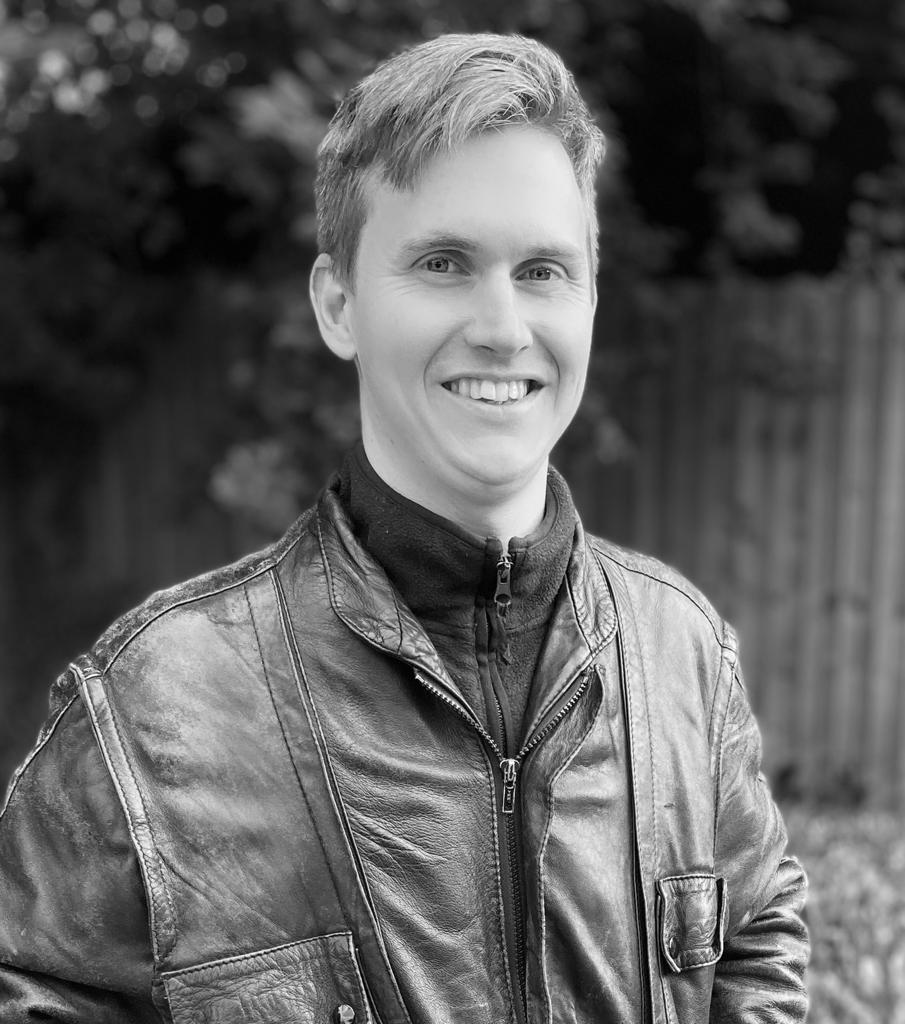
I’m Joe, an interdisciplinary computational ecologist at the University of Cambridge (Leverhulme Early Career Fellow). I have a broad interest in the causes and consequences of global biodiversity change (particularly pollinators and insects), loss-of-control risk for autonomous systems in conservation, combining distinct forms of foundational AI for the simulation of ecological interactions, and solving problems at the intersection of science and engineering.
My research has been covered in the Independent, Associated Press, the Telegraph, and la Republicca, and I’ve delivered talks internationally in Beijing, São Paulo, Montréal, Portland (Oregon), Brisbane, Bad Blankenburg, Balatonvilágos, Vilnius, Davos, Stellenbosch, London, Edinburgh, Liverpool, Durham, Oxford, Cambridge, and at both the Linnean and Royal Societies. I’ve also been interviewed on Deutschlandfunk Radio, Radio France Internationale, and Lithuanian Radio and Television (LRT). For my work I’ve been nominated twice by the Royal Society as an outstanding early career scientist, am an alumnus of Nuffield College and a Bye-Fellow of St Edmund’s College, and have won funding from ARIA (Advanced Research + Invention Agency), the Leverhulme Trust, the Isaac Newton Trust, and the Natural Environment Research Council.
Prior to Cambridge I worked at the Natural History Museum on the NERC Highlights grant GLiTRS (https://glitrs.ceh.ac.uk/), a consortium of brilliant entomologists and biodiversity scientists. On GLiTRS we compiled evidence on insect biodiversity and built statistical models to predict insect biodiversity change (see Cooke & Outhwaite et al. 2025). Before GLiTRS I worked at the Leverhulme Centre for Demographic Science (University of Oxford) and Nuffield College on the ERC Advanced Grant CHRONO, researching the causes of changes in human sleep disruption, building models predicting social media activity during the COVID-19 pandemic, and contributing towards the efforts of SAGE in anticipating the UK response to the reintroduction of behavioural interventions for COVID-19.
I completed my PhD jointly between UCL, the Institute of Zoology, and the RSPB (CASE partnership), supervised by Dr Tim Newbold, Dr Robin Freeman, and Prof. Richard Gregory. My PhD research explored a broad spectrum of tools and questions in the context of pollinator biodiversity change, including the use of text-mining tools to quantify biases and synthesise research data, the response of global pollinator biodiversity to land-use and climate change, and the potential of Wikipedia data for quantifying change in pollinator biodiversity awareness.
I’ve also worked at UNEP-WCMC converting VBA macros to R Shiny, at the journal Scientific Reports in the editorial team, and at a cafe where they let me make scones. Once.